
A small mark on a displayed sail can be more informative than a wide photograph of the entire vessel. It may be readable only at a particular angle, and an uncertain letter can send later research in the wrong direction.
From the permitted viewing position, take a contextual photograph first. Include the part of the sail or label that locates the mark. Then make a closer photograph without touching, unfolding or moving the material. Museum restrictions take priority over getting a sharper image.
Transcribe only what you can read. Use square brackets for a doubtful letter and keep a question mark beside an uncertain word. A modern annotation, repair label and maker’s stamp may occupy the same surface; their proximity does not make them contemporary.
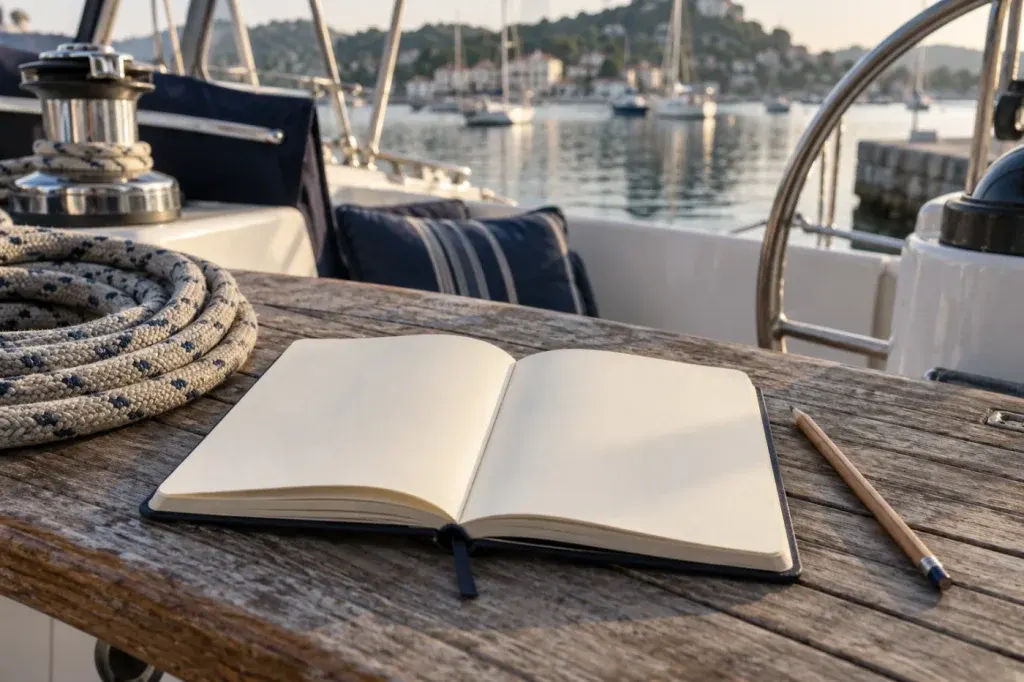
Your notebook can separate three things: the visible lettering, the museum’s identification and your proposed search terms. For example, a partly visible town name belongs in the first section as an incomplete transcription, not in the second as a confirmed place of manufacture.
If later research resolves the mark, add the source and date alongside the original note. Keeping the first uncertainty visible makes the research easier to follow. The goal is a usable record of a small clue, not a confident manufacturer attribution assembled from a few attractive letters.
Illustration selected from this site’s existing collection.