
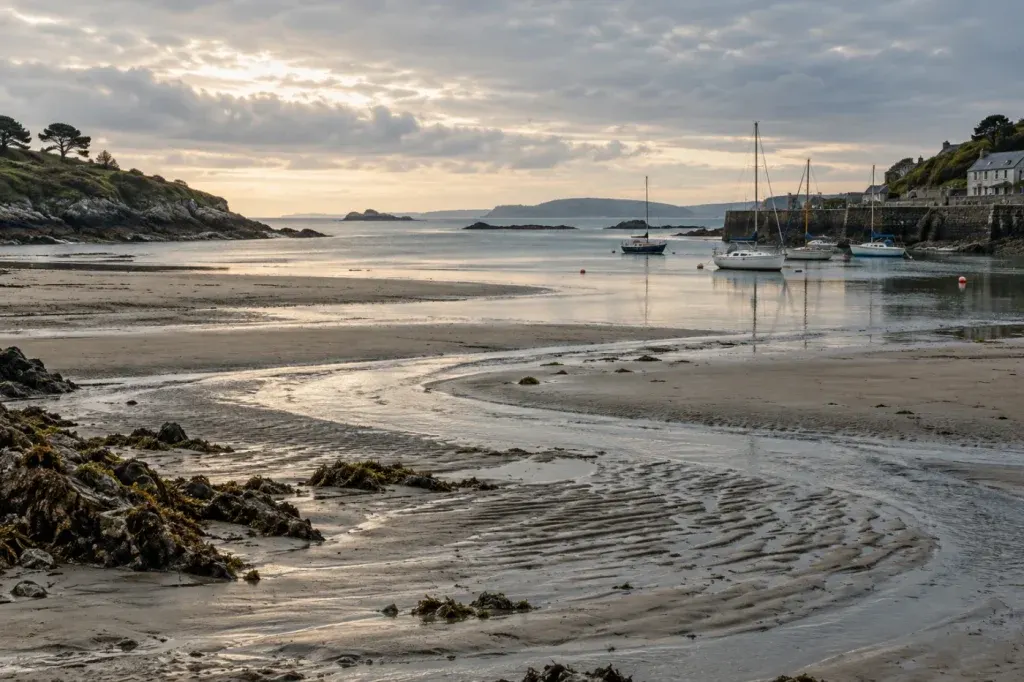
A sequence of harbour photographs can become confusing once the phone mixes it with close-ups and portraits. A simple viewing order helps preserve what you were trying to observe from shore.
Choose one standing place
From a safe public viewpoint, take a wide establishing photograph before turning for the next view. Keep some visible overlap, such as a distinctive building appearing near the edge of both pictures. Avoid stepping into working areas to obtain a tidier composition.
Write down where you stood and whether you turned left or right. Number the selected images in that order when preparing a private journal page. Their file timestamps alone may be awkward to follow after editing or copying.
Explain the joins
A stitched view can distort proportions or duplicate a moving boat. If you combine the images, describe the result as a panorama assembled from several exposures. Retain the individual frames for reference.
For a straightforward notebook, separate pictures with numbered captions may work better than a seamless strip. Add one sentence about what lies beyond each edge. You then have a readable record of a shoreline view, with no suggestion that it is an accurate navigational survey.