
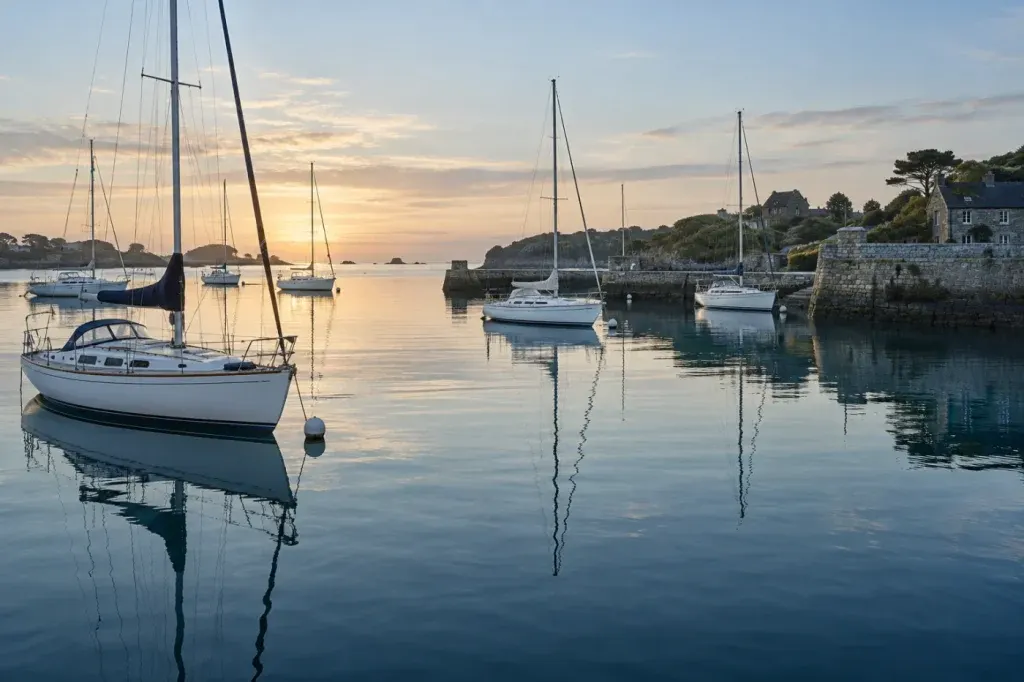
A boat can face either way in a photograph. Before writing “the left side of the boat,” pause: are you describing the picture, your viewpoint, or a side of the vessel? A short caption becomes much clearer when those three things are separated.
Start with the vessel’s ends
Bow names the forward end; stern names the after end. Those names belong to the boat even when the photographer moves. In a side view, first identify those ends from visible features you actually recognise. If the crop leaves them uncertain, say that the image shows a section of the hull instead of inventing an orientation.
Give the picture its own directions
Try an imaginary caption: “The bow points toward the right edge of this photograph.” That describes the composition without suggesting that right always means forward. Next, add where the view was taken: from the quay, from behind, or from a position you cannot establish. Do not infer the camera position solely from where a person is looking.
Use uncertainty to improve the caption
Compare “a rope at the back” with “a line is visible near the stern; its attachment point is outside the frame.” The second version keeps the useful observation and leaves the missing information missing. It does not turn a photograph into evidence about how the vessel was handled.
For boat-relative sides, return to the port and starboard introduction. For your next photo note, write one sentence about the boat and another about the image. That small separation makes an album easier to read months later.