
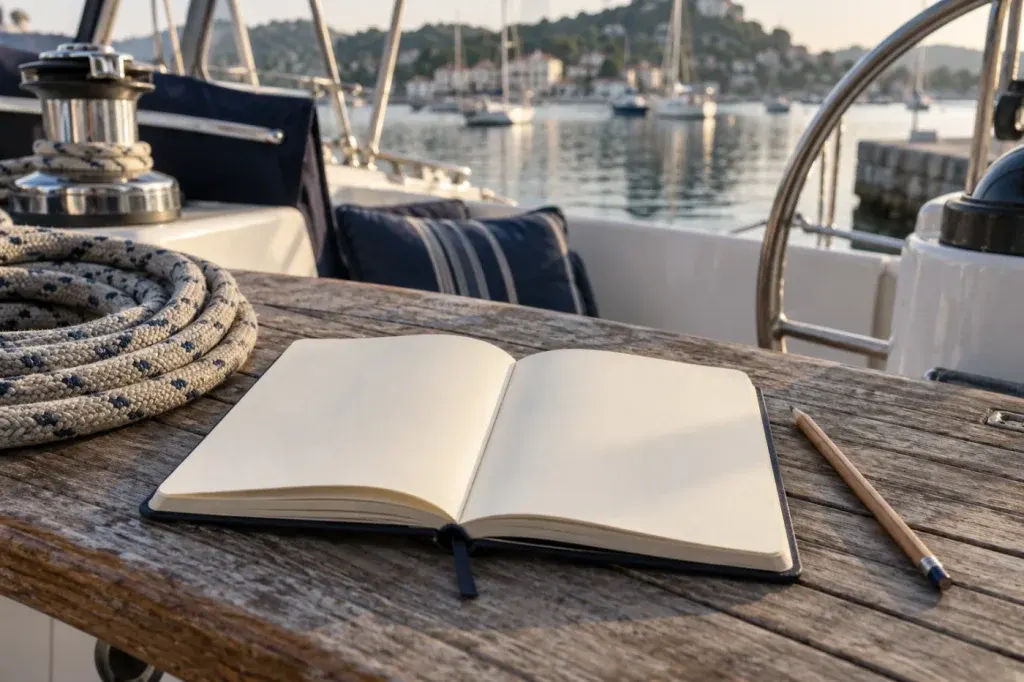
A rough sketch can help you notice a boat’s visible arrangement more carefully than a quick photograph. Choose a permitted, safe shore position and draw only what you can see. The exercise is about observation, not producing a technical plan.
Begin with a few relationships
Mark the hull outline, mast position if present, and the visible openings or equipment that interest you. Use arrows and plain descriptions when you do not know a term. Do not fill hidden areas with what you expect a similar boat to contain.
Add the viewpoint and date. A side view and a view from ahead reveal different relationships, while perspective can make distances look misleading. Avoid assigning dimensions unless they come from a reliable, identified source.
Turn uncertain labels into learning questions
Afterwards, compare your notes with an appropriate introductory reference or ask an instructor. Keep corrected terminology beside the original observation so you can see what you learned. A feature’s appearance alone may not establish its exact function or specification.
Do not use the drawing for boarding, rigging, maintenance, or navigation decisions. Its purpose is narrower and enjoyable: slowing down enough to distinguish what is visible, what you think it might be, and what you still need to understand about the boats around you.