
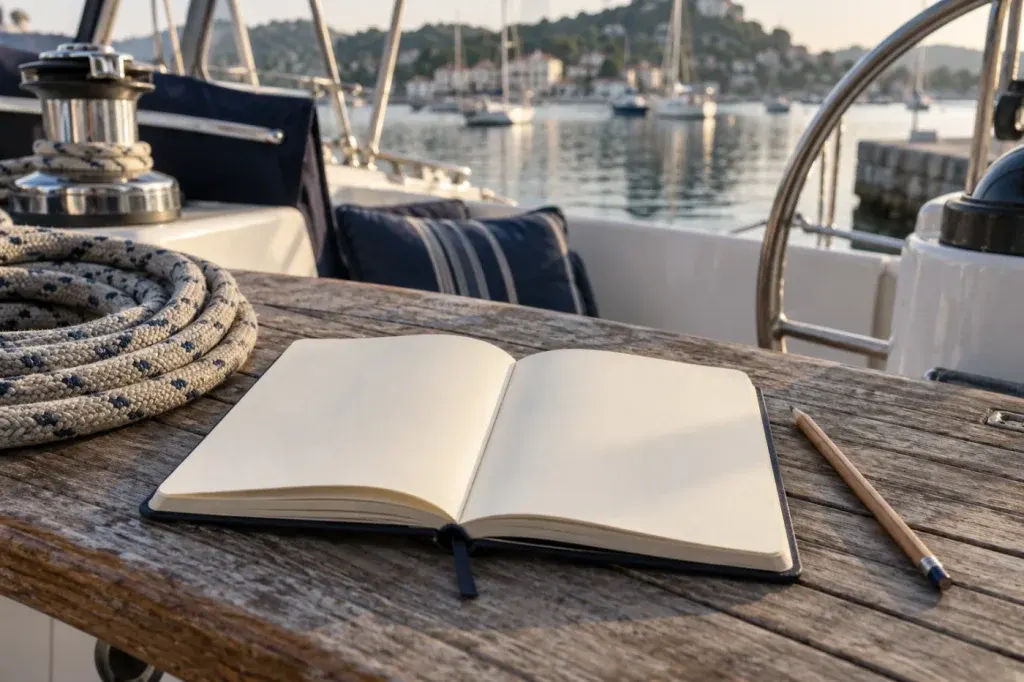
After a sailing lesson, memory can blend the original plan with what actually happened. A two-column note helps preserve the distinction. Use it as a learning journal alongside the instructor’s process, not as a replacement for an operational log or passage plan.
Capture the intention before departure
Write the agreed learning focus in plain language: practise a particular role, observe a manoeuvre, or become familiar with a piece of terminology. Follow the instructor’s directions and do not add tasks that interfere with safety or attention on board.
After the session, describe what you actually observed or practised. If conditions changed the plan, record the change without treating it automatically as a failure. Adaptation may have been the appropriate decision.
Make the comparison useful
Choose one difference between expectation and experience. What did it reveal about your understanding? Perhaps you needed a clearer briefing, or the terminology made more sense when attached to a visible action.
Finish with a question for the next lesson and note any answer already supplied by the instructor. The journal should support learning from a specific session, not grade the day against an inflexible checklist. Preserving the original intention makes the reflection more honest and helps you see how your questions develop over time.