
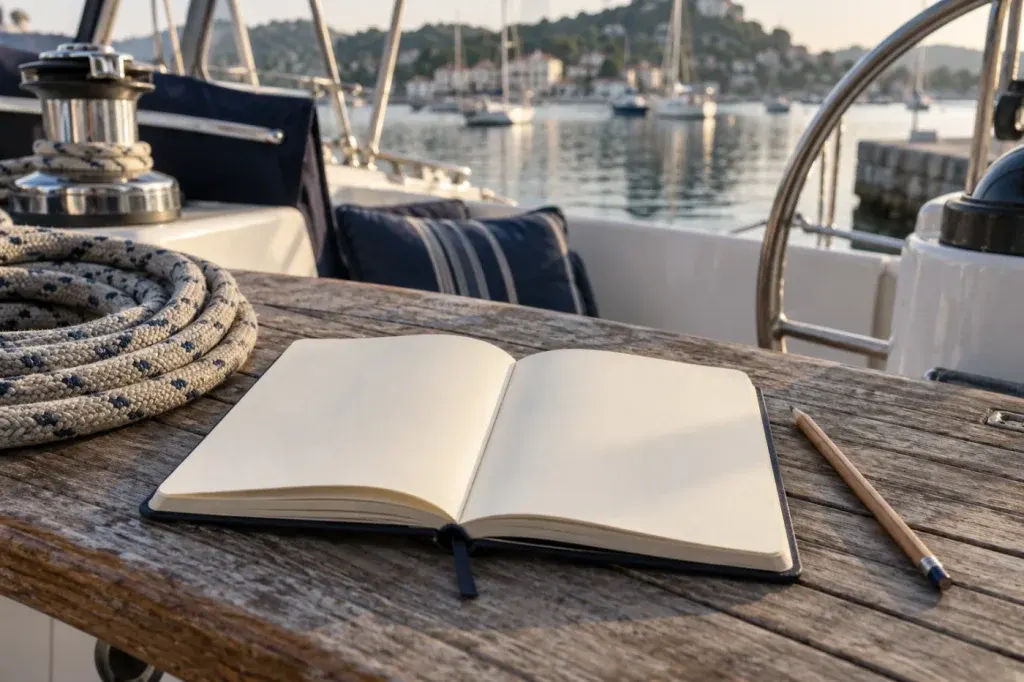
You do not need to draw a convincing yacht to keep an interesting harbour sketch. A few blocks, a shoreline and one carefully chosen detail can preserve a scene better than a page spent correcting the bow of a single boat.
Choose a small frame
From a permitted, safe place ashore, choose one view: perhaps a slipway between two buildings or a row of masts behind a wall. Draw a simple rectangle on the page. Anything outside that frame can wait.
Place the largest shapes first. A warehouse might become a low rectangle; the harbour wall a diagonal; the masts a loose cluster of vertical marks. This is an observation exercise, so an approximate shape is useful when it records a relationship you actually noticed.
Add one detail that belongs to this visit
Look for a feature that would be easy to forget: the narrow reflection under a dark hull, a coil of rope on the quay, or a patch of light between buildings. Give it a short label. “Bright strip below the red door” tells you more than “nice light”.
Then add the date, approximate time and viewpoint. Distinguish a label you know from one you have guessed. “Building beside slipway” is preferable to confidently naming an unfamiliar workshop.
Let empty space do some work
You can leave the water mostly blank. You can omit boats that crowd the page. A sketch need not inventory everything in front of you to become a meaningful record.
Keep it clearly labelled as a personal sketch, never a navigational chart. Later, pair the drawing with two sentences about what changed while you watched. The approach works well alongside a sailing journal, especially on days when a long written account feels unnecessary.